
Traffic Source Report
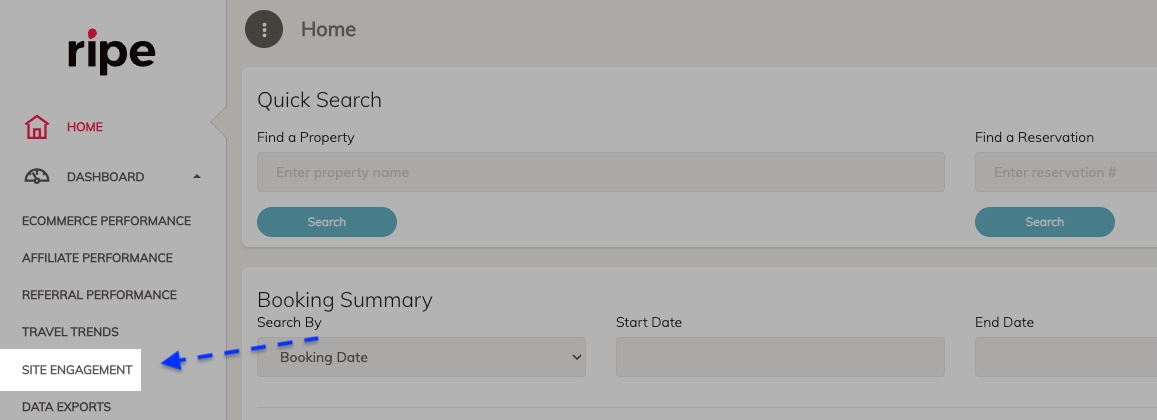
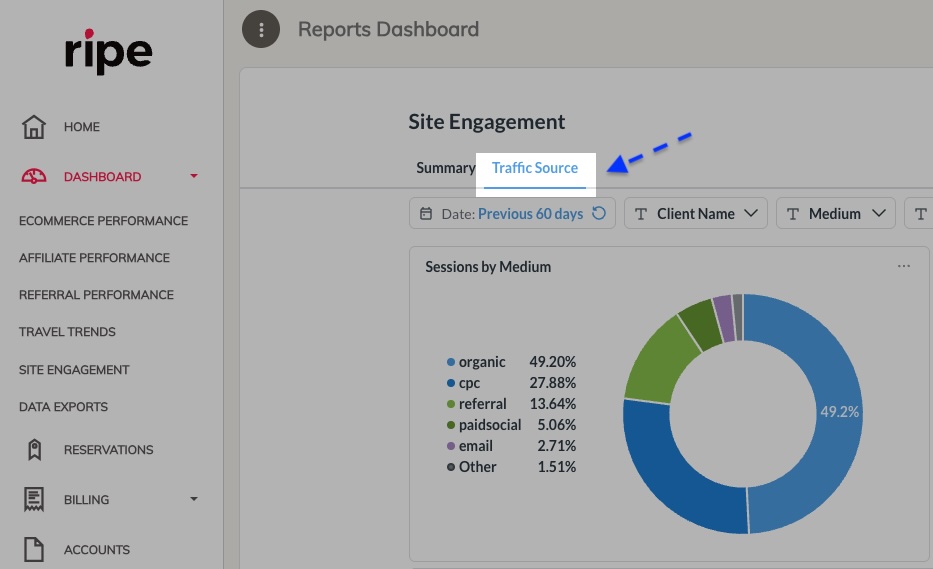
The Traffic Source report is now available in your Site Engagement dashboard.
Traffic Source Report
What it shows
This report surfaces sessions where a visitor arrived directly on your Ripe-managed site from an external source — meaning they didn't come through your main website first. When traffic flows through your parent site, referrer context is lost, so this report focuses specifically on the direct external entry points where attribution data is available.
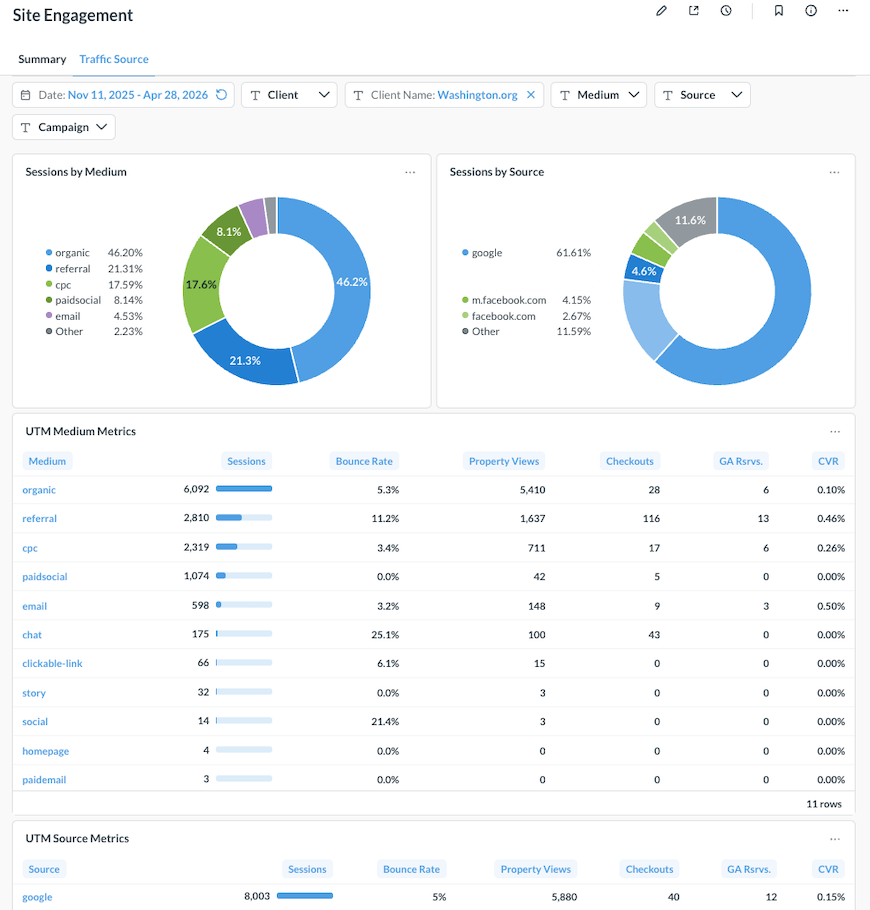
Preview example only. View your report for full contents
How traffic gets attributed
There are two attribution mechanisms at play:
-
Manual UTMs — when a URL is explicitly tagged with
utm_source,utm_medium, and/orutm_campaignparameters. This produces the most reliable and granular data. Campaign-level breakdowns in the report almost always originate here. -
Automatic inference — when no UTMs are present, Google Analytics will attempt to infer
sourceandmediumfrom the referring domain. Campaign cannot be inferred without explicit tagging. The catch-all bucket for anything that doesn't fit organic search, paid, or social isreferral— it simply means a website sent the visitor, and GA couldn't categorize it further.
Medium breakdown
referral— external websites and partner/affiliate sitespaid— tagged paid media campaignsemail— Klaviyo, Mailchimp, newsletters, and similarorganic— unpaid search traffic
AI traffic is showing up
ChatGPT and other AI Search referrals are now visible in Traffic Source data. Since Google hasn't yet created a formal classification for AI engines, they fall under referral — but you can filter by source, for example containing "GPT" to isolate them. If you're investing in content that surfaces in AI search results, this is where you'll start to see that payoff.
How to use it
The report is filterable by date range, medium, source, and campaign. It's most useful for understanding what's driving direct external traffic to your Ripe-managed site and evaluating the quality of traffic from marketing channels, partner sites, and affiliate links.
For best results, make sure any URLs you're distributing through email campaigns, paid ads, or partner placements are tagged with UTM parameters. The more consistently UTMs are applied, the more useful this report becomes.
Updated 22 days ago